

Winter might look picturesque on Instagram with fresh snow drifts and cozy cashmere sweaters, but the reality for your hair is often far less charming. We frequently hear clients complain this time of year that their usual trusty routine just isn't working anymore, leaving them frustrated with unmanageable manes.
The season creates a perfect storm for hair damage that attacks from all sides: biting cold outdoor air, aggressively dry indoor heat, and the constant friction of scarves, coats, and high collars. Suddenly, locks that were glossy and swingy in October feel brittle, look dull, and refuse to cooperate by late December.
At Christopher Noland Salon, we believe healthy hair requires a seasonal shift in strategy. Just as you change your wardrobe from linen to wool, you must adapt your hair care regimen to match the environment. Winter is the perfect time to reset your routine and give your hair the extra nourishment it's craving to survive the slump.
Here is your expert, comprehensive guide to navigating winter hair woes and keeping your style vibrant until spring arrives.
The Core Issue: Combating Severe Dryness
Moisture loss is the single biggest culprit behind winter hair damage. The distinct lack of humidity in cold air literally sucks moisture right out of your strands, lifting the cuticle and leaving the cortex vulnerable to breakage. Combatting this requires a multi-pronged approach focusing on smarter washing habits and intense, layered hydration.
Upgrade Your Wash Day Routine
If you are still using the same light, clarifying shampoo you used during peak summer humidity, it's time to switch. We highly recommend transitioning to a professional-grade moisturizing shampoo and conditioner tailored to your specific hair texture.
Many drugstore brands contain harsh sulfates that strip away natural sebum—the protective oils you desperately need right now to defend against the cold. Instead, look for salon-quality formulas enriched with ingredients like hyaluronic acid for drawing in moisture, or natural oils like argan and jojoba to seal it in. A quality professional product will cleanse gently while depositing essential hydration without weighing hair down or making it look greasy.
Furthermore, be mindful of your water temperature. As tempting as a steaming hot shower is on a freezing dark morning, hot water blasts open the hair cuticle, allowing internal moisture to escape and causing beautiful color to fade much faster. Try to rinse your hair with lukewarm, or even cool, water to seal the cuticle tight for better shine and resilience.
The Power of Weekly Deep Conditioning
Your standard daily conditioner might need backup during the deep winter months. Think of a hair mask as a tall glass of water for incredibly thirsty strands.
Incorporating a deep-conditioning treatment once a week helps strengthen the hair shaft, improve elasticity so it bends rather than breaks, and maintain softness. For the best results, squeeze excess water out of your hair after shampooing, and apply the mask primarily from the mid-shaft to the ends—where your hair is oldest and driest. Let it sit for at least 10–15 minutes before rinsing. For truly distressed hair, ask your stylist about one of our customized in-salon restorative treatments during your next visit to push the reset button on your hair's health.
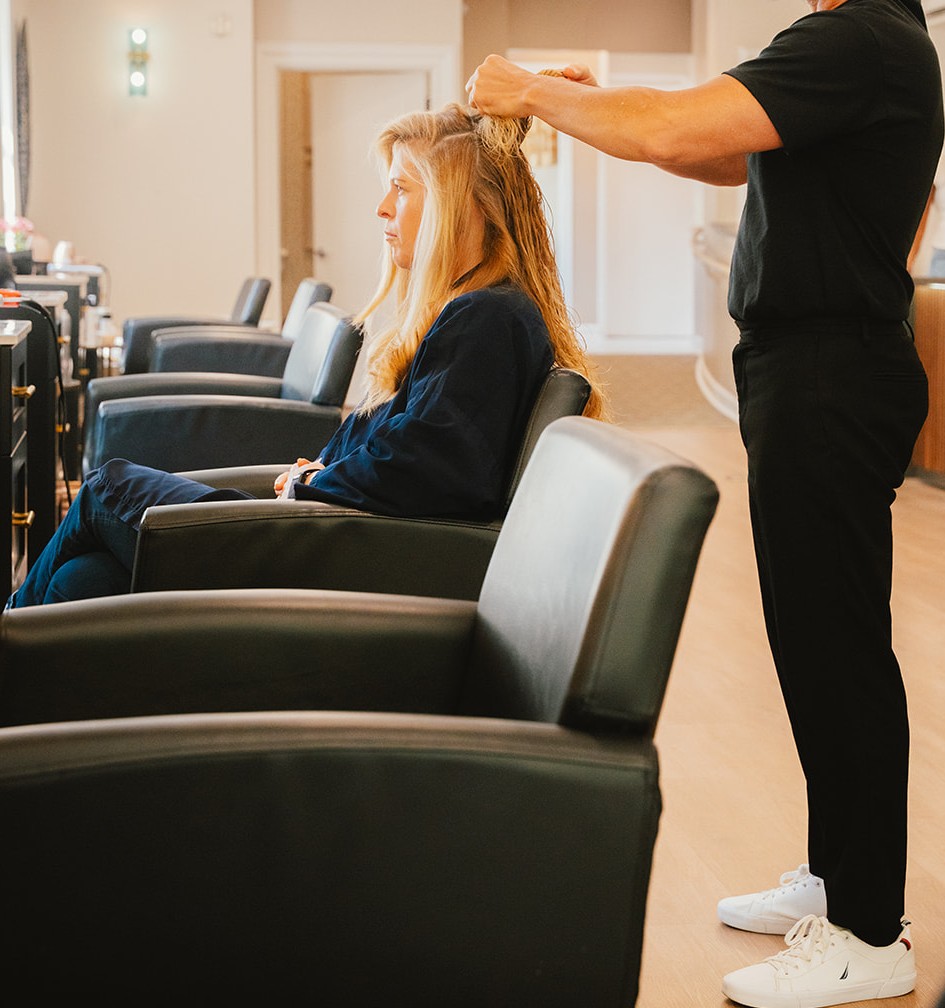
Rethinking Your Relationship with Heat
We know that air-drying isn't always practical when it's twenty degrees outside—leaving the house with damp hair in winter is miserable and potentially damaging if the hair freezes. However, relying heavily on blow-dryers, curling irons, and straighteners during winter doubles down on the dryness caused by the weather.
If you must heat style, never skip a thermal protectant spray or serum. Think of it as essential sunscreen for your hair against searing heat. Furthermore, turn the temperature setting down on your tools. Most hair types do not need the maximum heat setting (often 400+ degrees) to achieve a style. Lowering the heat even 50 degrees can significantly reduce long-term damage to the already fragile cuticle layers, keeping your hair smoother over time.
Battling the Elements and Accessories
We love winter fashion, but your hair might disagree. Hats, earmuffs, and heavy woolen scarves are winter essentials for staying warm, but they come with annoying downsides: dreaded "hat hair," intense static electricity, and friction-induced breakage at the nape of the neck.
The Silk Solution to Friction and Static
Wool and heavy cotton fabrics are rough on the microscopic hair cuticle. The constant rubbing of hair against a wool scarf acts like fine-grit sandpaper, causing significant breakage and tangling at the nape of the neck over time.
Our stylists suggest a simple but effective hack: line your favorite winter beanies with silk or satin. Alternatively, wrap a chic silk scarf around your hair before putting on your wool hat to create a barrier. Silk allows the hair to glide against the fabric rather than snag, protecting your precise cut and preserving your color.
Static is another major annoyance caused by dry air and friction. To combat flyaways, keep a dryer sheet handy in your purse to lightly smooth over your hair in an emergency. Better yet, ask your Christopher Noland stylist for recommendations on anti-static finishing serums that lock in moisture and block out dry air. If your hair falls completely flat after removing your beanie, flip your head upside down and give the roots a quick spritz with a texturizing spray, then gently tousle with your fingers to revive volume without creating frizz.
The Foundation: Winter Scalp Care
You cannot grow healthy, vibrant hair from an unhealthy environment. A healthy scalp is the foundation for great hair, yet it is often ignored until there is an itchy problem.
Dryness, embarrassing flakes, and uncomfortable tightness are very common this time of year due to indoor heating systems sapping every ounce of moisture from the air. If you are noticing irritation, avoid heavy styling products like dry shampoos or heavy waxes that can build up on the scalp and choke the follicles. We recommend incorporating nutrient-rich scalp oils before shampooing to restore lipid balance and support optimal hair growth.
Maintenance: The Importance of the Winter Trim
It is tempting to skip salon appointments when you just want to hibernate under a blanket, but winter is actually the most critical time to maintain your schedule.
Dry ends split faster than healthy hydrated ones. Once a hair strand splits at the end, that damage can travel up the hair shaft like a zipper, eventually requiring a significantly shorter cut to fix the damage. Regular "dustings" or micro-trims every 6–8 weeks are essential in winter to keep split ends at bay and maintain your style's shape. It's proactive care that keeps your hair looking polished, even on the dreariest days.
Don't let winter win the battle for your hair's health. With a few strategic adjustments to your routine and professional guidance, you can maintain vibrant, soft hair all season long. Let the experts at Christopher Noland Salon help you protect, nourish, and love your hair—no matter how frightful the weather outside gets.